

The Viajes National Geographic magazine has dedicated a report to Bibo Park, which it presents as one of the most innovative botanical parks in Europe. Among its technological advances is a system capable of obtaining drinking water directly from the humidity of the air, used to produce Nubea, the Agua del Cielo de Ibiza.
On August 14, 2024, journalist Irene Mireia Vera Pérez published the report on Viajes National Geographic "Why Ibiza has Europe's most innovative botanical park".
The article explores the facilities of Bibo Park, a space where biotechnological research, biodiversity conservation and scientific dissemination coexist with technologies applied to the environment.
Among them is a system of atmospheric water generation that allows to transform the humidity of the air into drinking water, later bottled in the park's own facilities.
This is one of the applications of the atmospheric water generation technology developed by Teexmicron and used in Bibo Park projects.
Drinking water from the air: one of the innovations highlighted by National Geographic
One of the most interesting aspects of the report is the attention it devotes to technologies capable of harnessing natural resources in different ways.
National Geographic describes a generator that captures water vapour from the atmosphere and transforms it, through filtration and treatment, into safe water for consumption.
The result is Nubea, known as Agua del Cielo de Ibiza, a product that is bottled in Bibo Park and that visitors can taste during their tour.
This application shows how atmospheric water generators can be integrated into tourism, education and packaged water production projects.
Unlike conventional catchment systems, technology obtains water from the moisture present in the environment. Its production depends on the temperature, relative humidity and capacity conditions of the equipment.
Teexmicron and atmospheric water generation technology in Ibiza
Teexmicron has participated in Bibo Park projects by providing atmospheric water generators.
The application of this technology in the park had previously been documented in research on the ecological cultivation of fungi and in the development of initiatives to produce water obtained from air.
The Nubea project represents another application: the production and packaging of drinking water from atmospheric humidity.
Atmospheric water generators can capture water vapour from the environment, condense it and submit the water obtained to the treatment processes necessary for its intended use.
The experience of Bibo Park shows that this technology can be integrated into real facilities, combining water production, research and outreach.
How does a machine that produces water from the air work?
A machine to produce atmospheric water, also called an atmospheric water generator, takes advantage of the water vapour present in the atmosphere.
In condensation-based equipment, the process includes several stages:
Air capture: the equipment introduces environmental air containing water vapour.
Condensation: by means of a cooling system, part of that water vapour is transformed into liquid water.
Treatment: the collected water passes through the appropriate filtration, conditioning and disinfection processes.
Use: treated water can be used for human consumption or other applications, provided it meets the applicable quality requirements.
The production capacity depends on the generator model and environmental conditions.
Therefore, before installing an atmospheric water generation system, it is necessary to study the supply needs, the climatic characteristics of the site and the technical requirements of the installation.
Bibo Park: Biotechnology, Biodiversity and Sustainable Solutions
The National Geographic report is not limited to water production.
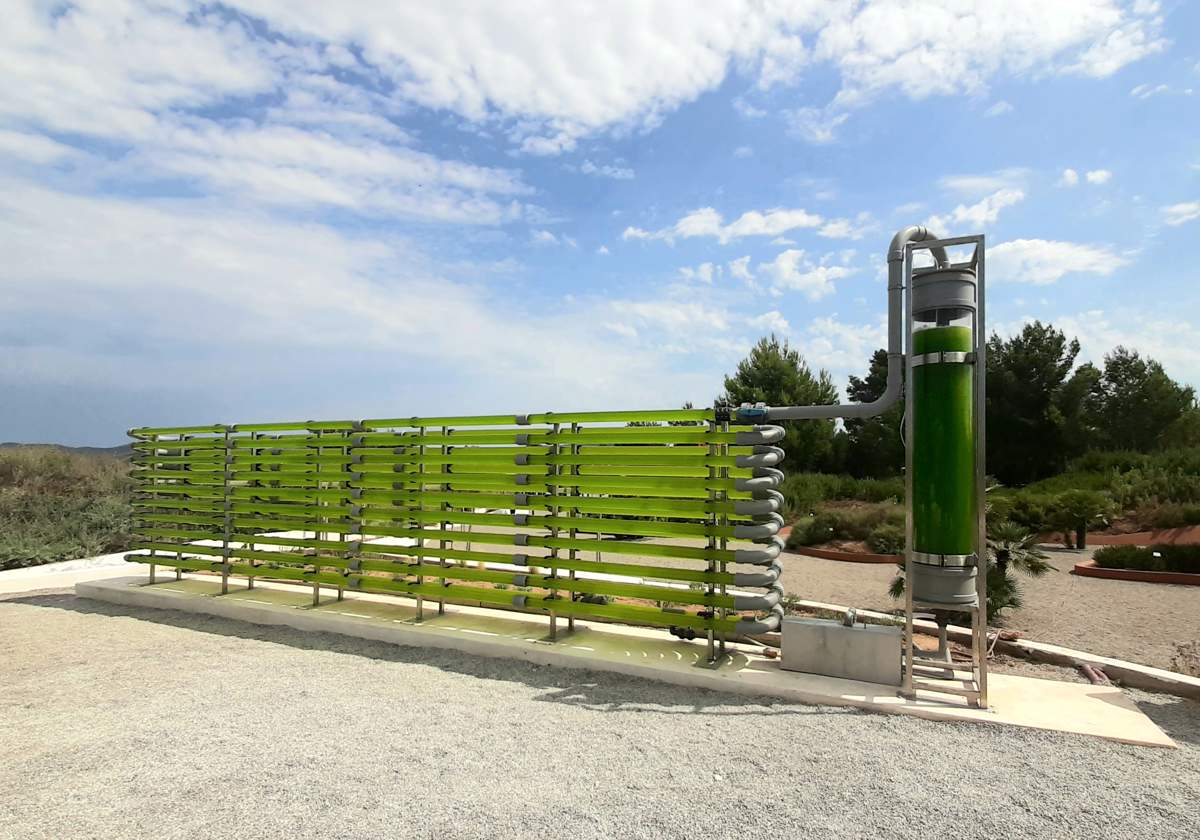
The publication also describes other innovations present in Bibo Park, such as photobioreactors for the cultivation of microalgae and technologies capable of harnessing biological processes to generate electricity.
Its facilities also include a plant piano that uses live plants to create an interactive experience of sounds and lights.
According to the data collected by the magazine, the park houses more than 25,000 plants, of which approximately 40% are endemic to the Pitiusas Islands.
The project, promoted by Eduardo Mayol Aranda, combines plant conservation, scientific research and educational activities aimed at visitors of different ages.
Atmospheric water generation is part of this set of technologies that seek new applications of natural resources.
Atmospheric water generators for new applications
The experience of Bibo Park shows that atmospheric water generation technology can be used in projects that go beyond domestic supply.
The production of water for bottling, tourist facilities, research projects and certain agricultural applications are some of the areas in which their use can be studied.
Each project requires an analysis of the climatic conditions, energy consumption, the necessary water volume and the applicable health requirements.
At Teexmicron we develop technological solutions to obtain water from environmental humidity and adapt them to different supply needs.
The case of Bibo Park is an example of how atmospheric water generation can be integrated into an innovation project that combines nature, science and new water applications.
Viajes National Geographic: Original report on Bibo Park
The original report was published on Viajes National Geographic on August 14, 2024 and is signed by Irene Mireia Vera Pérez.
The publication addresses the history of the park, its facilities, the conservation of plant species and the technologies that make it a unique space within the scientific and tourist offer of Ibiza.
Among these technologies, the article specifically highlights the production of drinking water from atmospheric water vapour and its packaging under the name Nubea.
Original source: Viajes National Geographic
Title: Why Ibiza has Europe's most innovative botanical park
Author: Irene Mireia Vera Pérez
Date: August 14, 2024