

To understand how much electricity an atmospheric water generator uses, the power rating on its data sheet is only a starting point. A decision requires relating the energy used to the water produced over a known period and under known conditions.
This guide explains how to make that comparison without confusing units or treating rated capacity as a production guarantee. If you are still defining your project, request advice to clarify your requirements, then consult the specifications in the Teexmicron equipment catalogue.
kW and kWh: two measures for different questions
Kilowatts (kW) express power: they help explain the equipment's electrical requirements at a given moment. Kilowatt-hours (kWh) express the energy used over a period. This distinction, explained by the US Energy Information Administration, is essential when interpreting a technical data sheet.
Multiplying power by time gives an energy estimate when that power level is maintained throughout those hours. A real installation may have operating cycles, varying loads and auxiliary consumption. Multiplying rated power by every hour of the day is therefore no substitute for measuring actual operation.
When requesting information, clarify whether the figure refers to maximum power, operating power or measured energy. Also ask which auxiliary equipment it includes and the temperature and humidity at which it was measured.
A useful comparison: energy per litre produced
To calculate specific energy consumption, record electricity use and the volume of water produced over the same interval:
Specific energy consumption (kWh/l) = energy consumed (kWh) ÷ water produced (l).
The period must have a defined start and end. Check that the electricity meter covers the system you want to assess and that the volume represents water actually generated during that interval. If there is a tank, distinguish the equipment's output from water drawn by users: the quantities may differ.
Comparing two data sheets requires checking these same conditions. A figure obtained in a particular test does not automatically describe a whole year or every location. The aim is to build a traceable estimate with assumptions that can be reviewed.
Converting kWh/l into electricity cost per litre
Once specific energy consumption is known, relate it to the electricity price applicable to your installation:
Electricity cost per litre (€/l) = specific energy consumption (kWh/l) × energy price (€/kWh).
Use the project's tariff and currency. If prices vary by time of day, calculate each period separately or use a consumption-weighted average price. Forecasts for Spain, Mexico, Colombia or Chile may involve different supply arrangements; avoid reusing a marketing figure without checking its basis.
This calculation covers electricity costs. To estimate the total cost of water, add the relevant items: consumables, cleaning, maintenance, storage, investment and installation, over a defined period of use. Request a quotation that separates these costs.
Why climate affects the result
Water production by condensation depends on the available air. The EPA technical brief on atmospheric water generation highlights the importance of temperature and humidity and describes the energy requirements of condensation and ventilation systems.
For your project, request output and consumption data under conditions representative of the site. If the number of litres obtained changes, the ratio of energy to water may also change. Our atmospheric water generation technology section explains the process before you compare the model's operating conditions.
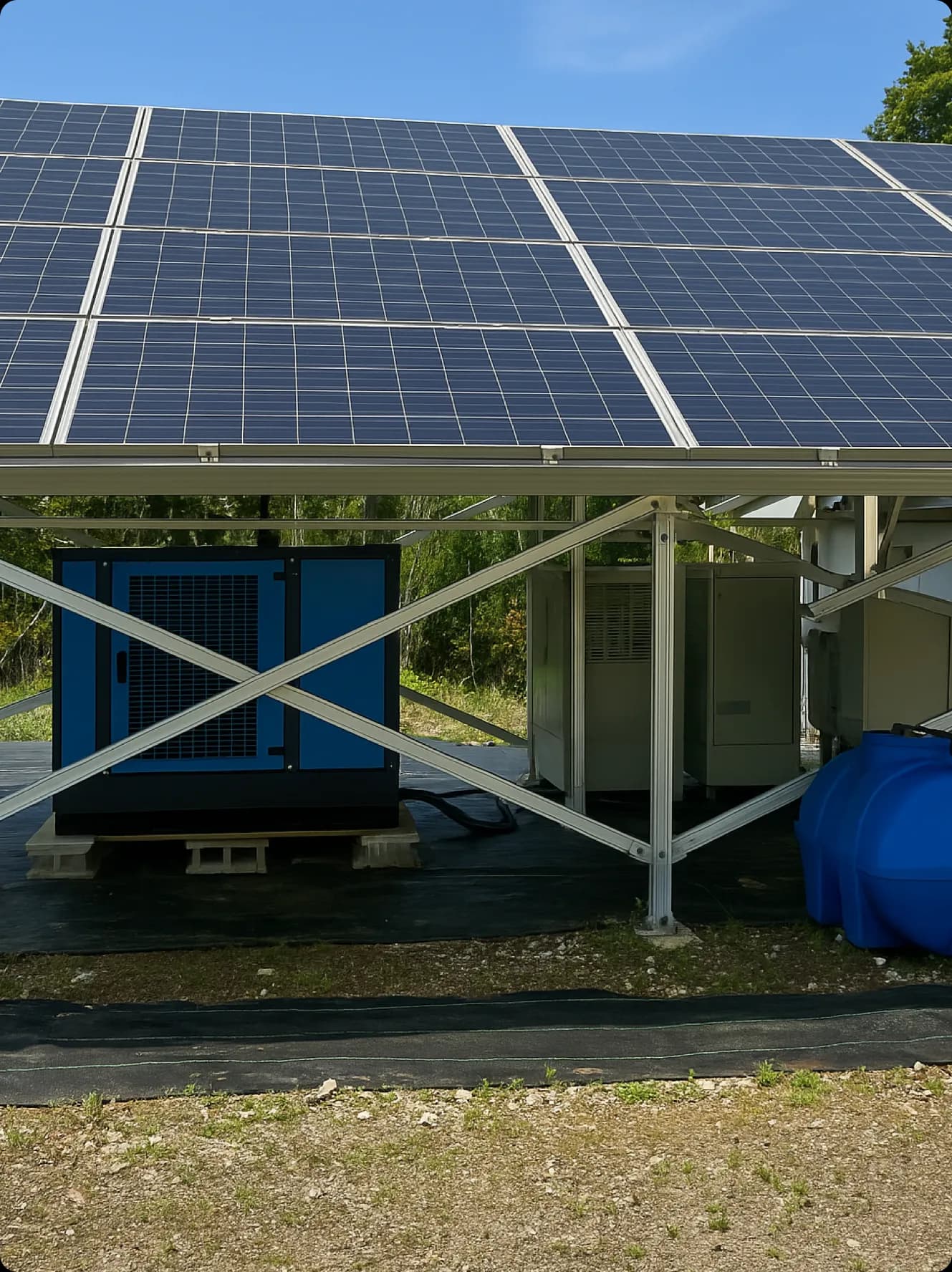
Can it be combined with solar energy?
Integration requires assessing the equipment's consumption, solar generation hours and the project's supply continuity requirements. If electricity storage is planned, it must be sized with the rest of the system. Having solar panels alone does not guarantee autonomy throughout the day.
Explore our energy solutions to consider a configuration and the purchase and installation section to prepare the site requirements. In complex installations, an engineering study helps coordinate water, electricity and storage.
Information to provide for a useful estimate
- Location and expected temperature and humidity conditions.
- Daily volume required and usage times.
- Model or capacity being considered.
- Available electricity supply and applicable tariff.
- Tanks, auxiliary equipment and maintenance conditions.
This information allows a solution to be assessed using consistent criteria. Contact Teexmicron to discuss your installation and request the conditions supporting each estimate. The sources in this guide explain general concepts; they do not certify the consumption of any model from the brand.